
Dear Friends,
So much of what we do at Amplify starts with listening. To executive directors and board chairs. To donors. To the staff who keep an organization running when no one’s watching.
We try to listen before we lead, because more often than not, what an organization needs is already there. It just hasn’t been heard yet.
This newsletter is our chance to share some of what we’ve heard.
The organizations we work with trust us with real moments: a campaign that has to change course, a family deciding what its giving should stand for, a board wondering what comes next. We learn something every time. And much of it seems worth passing along.
So, four times a year, we’ll write about it as plainly as we can. What’s working, and where we had to stop, rethink and adjust.
We’ll also introduce you to the people behind the work. I’ve spent my career in this field, and I still count myself lucky to climb alongside these colleagues, and alongside all of you.
Thank you for your trust, your partnership and your friendship. We’re grateful for every conversation.
And we’re still listening.
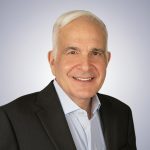
Michael Ostroff Co-Founder & CEO, Amplify Partners
What began largely as a desire to rebuild an educational wing and create a new Lifelong Learning Center evolved into a much broader conversation about Shalom’s future and the role its physical home should play in supporting it.
Fairly early in the process, it became clear that this could not simply be a campaign about renovating a building. The more important story was about creating a home worthy of the Jewish life that happens there, a place for learning, worship, celebration, connection and community.
The building matters because of the life that happens inside it.
That sounds simple, but getting there, and keeping everyone focused on that larger story, has been part of the work.
The engagement has also reinforced something else: campaigns almost never unfold exactly as originally envisioned. Our job as counsel is not simply to hand a client a roadmap and expect them to follow it. It is to recognize when circumstances have changed, help leadership understand what those changes mean, and provide the guidance necessary to adjust while keeping everyone focused on the larger objective.
The Plan Has to Be Able to Change
Shalom entered the process without a strategic plan, but with an ambitious vision and significant capital needs. As the campaign developed, the project continued to evolve. Priorities shifted. Costs became clearer. Fundraising realities came into sharper focus. Donor conversations influenced the thinking. Leadership had to make choices about what was essential, what could wait and what the congregation could responsibly undertake.
Throughout that process, we kept coming back to a few basic questions: What does the congregation really need? What can the community support? What needs to happen now? And how do we preserve the larger vision while making responsible decisions about what comes next?
Those conversations led to meaningful changes in both the scope and financial framework of the campaign.
We don’t view those changes as evidence that the original planning was wrong. Quite the opposite. Good campaign leadership has to be willing to respond to better information.
Campaign discipline and flexibility are not opposites. You need both. The discipline is in staying focused on the objective; the flexibility is in being willing to change the route when the facts tell you that you should.
Success Can Create Its Own Challenges
By the summer of 2026, Shalom had secured commitments totaling approximately 85% of its campaign goal, representing significant early support from the community.
That’s a very positive story. But success can create its own communications challenge.
Leadership made the deliberate decision that it did not want to rely on a mortgage or significant long-term debt to finance construction. As a result, additional cash still needs to be raised before construction can begin.
So, how do you celebrate what has been accomplished while also being clear that there is still considerable fundraising ahead?
You can’t simply tell people, “We need more money.” The conversation has to explain why.
We worked with leadership to frame that decision around stewardship and fiscal responsibility. The additional fundraising isn’t simply about filling a gap. It follows from a deliberate decision to undertake the project in a way that strengthens Shalom rather than leaving future generations with an unnecessary financial burden.
The Campaign Keeps Evolving
One of the more interesting aspects of the Shalom engagement has been watching the campaign change as it moves from one stage to the next. The questions we are working through today are not necessarily the questions we were asking six months ago.
As Shalom prepares to move from a quiet phase centered largely on major donors toward engaging the broader congregation, the challenge isn’t simply how to reach more people. It is how to bring a much larger community into a campaign whose scope, financial framework and story have evolved along the way.
That has required us to continually revisit the narrative. What does the congregation need to understand now? What may be confusing to someone who hasn’t been close to the campaign? How do we celebrate significant fundraising success while explaining why there is still more to do? And how do we keep the conversation focused on what the project will make possible rather than allowing it to become simply a discussion about construction?
We kept coming back to:
The building is the setting; Jewish life is the case.
Much of the Real Work Happens Between the Milestones
With so many different stakeholders involved, they don’t always see the project through the same lens, nor should we expect them to.
That means questions continually surface about balancing donor interests and new opportunities with the priorities of the organization and knowing when to be flexible and when to hold the line.
There is no campaign manual that answers those questions.
They require judgment, an understanding of the relationships involved and a clear sense of the larger strategy. Much of our role has been helping leadership keep fundraising strategy, institutional priorities, project planning and donor interests aligned rather than allowing them to pull in different directions.
Sometimes that means recommending a course of action. Just as often, it means asking the question that helps leadership get to the right answer themselves.
And that role has become increasingly important as the engagement has progressed. The longer we work with Shalom, the more context we have and the better able we are to understand not just the immediate question, but what a particular decision may mean three or four steps down the road.
In many ways, that’s where the real work of counsel happens.
What We Are Learning
The campaign we are advising today is not exactly the campaign we started with. That isn’t necessarily a problem. The important question is whether the changes are thoughtful responses to what we have learned or simply reactions to the latest issue or opportunity.
We’ve also learned that alignment requires constant attention, and that the story has to evolve along with the strategy.
And perhaps most importantly, some of our most valuable work has happened in conversations that were never contemplated in the original scope of work. A question arises, an opportunity presents itself, a donor conversation changes direction, or leadership needs to make a decision. Being close enough to understand the context and trusted enough to be part of those conversations has mattered enormously.
And the Story Isn’t Finished
Shalom’s campaign is still underway, which is actually one of the reasons it’s worth sharing now.
This isn’t the traditional case study with a neat ending, a goal was established, the campaign was launched, the money was raised and everyone declared success.
We’re still in the middle of the story.
And in many ways, that’s what makes it useful.
This is what campaign counsel actually looks like: helping an organization move from vision to strategy, from strategy to donor conversations, from major-gift fundraising to broader community engagement, and continuing to adjust as opportunities and challenges emerge.
Because campaigns, and organizations, rarely move in a straight line.
The real test of counsel isn’t simply whether you can execute the plan you started with. It’s whether you can help leadership recognize when circumstances have changed, understand the implications of the choices in front of them, and navigate those decisions without losing sight of the larger objective.
Sometimes we lead. Sometimes we challenge. Sometimes we coach. Sometimes we connect dots that people inside the organization may not see because they are so close to the work. And sometimes the most useful thing we can do is help a leadership team think through a decision before they make it.
That’s the larger lesson from Shalom, and it reflects the role we try to play at Amplify Partners.
We don’t see our work as simply helping organizations raise money or execute a campaign plan. We work alongside leaders as strategic counsel, helping them navigate complexity, make thoughtful decisions, stay aligned as circumstances change, and turn an aspirational vision into something their community understands, believes in and is prepared to invest in.
That’s the work of Amplify Partners.
Our work with the Hyman Family Foundation grew out of a longstanding relationship with Simcha Hyman, whom Michael first supported in 2023 while Simcha was on the board of RSK. We were privileged to partner with Simcha and Rachel Hyman as they continued to refine the strategic framework for their family’s philanthropy.
Working alongside the family, we helped to articulate the Foundation’s mission, vision, and theory of change across its principal areas of interest: improving quality of life in the Jewish community, particularly around mental health, substance use, and poverty; addressing antisemitism through understanding, positive narratives, and allyship; and supporting innovation in Israel, including a focus on mental health.
Throughout, our role was to help translate the family’s deeply held values into a purposeful framework, always guided by the Hyman’s clear vision, willingness to take intelligent risks, and commitment to funding opportunities that traditional philanthropy may overlook.

Joshua can execute a Donald Duck sneeze so convincing it disarms a room.
It has never once helped him at work. (We’re keeping an eye out for the right board meeting.)
Before Amplify, Joshua was #2 nationally at FIDF in New York. A big part of the job was rethinking how the agency was structured across the country, and he still walks into every Amplify engagement with that same open mind and appetite for a creative fix.
The work he’s proudest of? He designed and led a $200 million endowment campaign at JDC. That money will keep the agency on solid footing long after the campaign team has moved on.
Ask him what an organization should fix if it only has the energy for one thing this year, and he doesn’t hesitate: build a culture of teamwork and efficiency, with everyone pulling toward the mission.
And the lesson a client taught him recently? Talk early, talk often, and be upfront. That’s how you stay on the same path from kickoff to finish line.
Now, the fine print.
The fastest way to lose Joshua in a meeting is to keep one eye glued to your phone. Consider yourself warned.
The best bad advice he ever got: there’s no such thing as over-preparing for a meeting. (There is.)
If he weren’t doing this, he’d happily be terrible at riding the bench as a designated hitter for the Atlanta Braves. His walk-up song for client meetings is “Born to Run.”
Lightning round
Coffee or tea? Coffee, delivered by IV for uninterrupted pleasure. Inbox zero or inbox chaos? Chaos to the Nth degree. Deck or one-pager? Deck. He loves PowerPoint. Call or email? Email, “retrogrouch that I am.”
We asked Joshua what question we should have asked him. His pick: why was the Penny Lane Beatles Museum his favourite Amplify gig?
His answer, in full: “Duh, The Beatles.”